

Now Open — Accepting New Patients!
Many parents in Fulshear, Jordan Ranch, and Katy assume the first dental visit can wait until a child starts school. The American Dental Association and the American Academy of Pediatric Dentistry both recommend something sooner: a first visit by your child’s first birthday, or within about six months of the first tooth coming in.
That can sound early for a mouth with only a few teeth. The goal of a first visit is not a big treatment plan. It is a friendly introduction, a quick look at how teeth and gums are developing, and practical guidance you can use at home right away.
Baby teeth eventually fall out, so it is easy to think they are not worth much worry. In reality they help children chew, speak clearly, and hold space for the adult teeth growing underneath. A baby tooth lost too early to decay can let neighboring teeth drift, which may affect how permanent teeth come in.
Cavities in young children are also common and can develop quickly, especially when teeth are exposed to milk, juice, or snacks throughout the day. Catching early warning signs, like chalky white spots near the gumline, gives you a chance to change habits before a small problem grows.
For babies and toddlers, the visit is usually short and relaxed. Many little ones sit on a parent’s lap for a knee-to-knee exam, so they can see a familiar face the whole time. Your dentist gently checks the teeth, gums, and bite, and talks with you about anything you have noticed.
Older children may have a gentle cleaning, and X-rays are only suggested when they are actually helpful. You can read more about our approach on the children’s dentistry page.
Before teeth appear, you can wipe your baby’s gums with a soft, damp cloth after feedings. Once the first tooth arrives, switch to a soft infant toothbrush twice a day. For children under three, a smear of fluoride toothpaste about the size of a grain of rice is the common guidance. From about ages three to six, a pea-sized amount is typical, and your child should spit rather than swallow.
Help with brushing until your child can do a thorough job on their own, which for many kids is around age seven or eight. Start flossing once two teeth touch. Water between meals and fewer sticky, sugary snacks make a real difference over time.
Kids pick up on our cues. Keep the language simple and positive, read a picture book about visiting the dentist, or let your child “count” a stuffed animal’s teeth at home. Avoid words like “shot” or “hurt,” and try to schedule visits at a time of day when your child is usually rested.
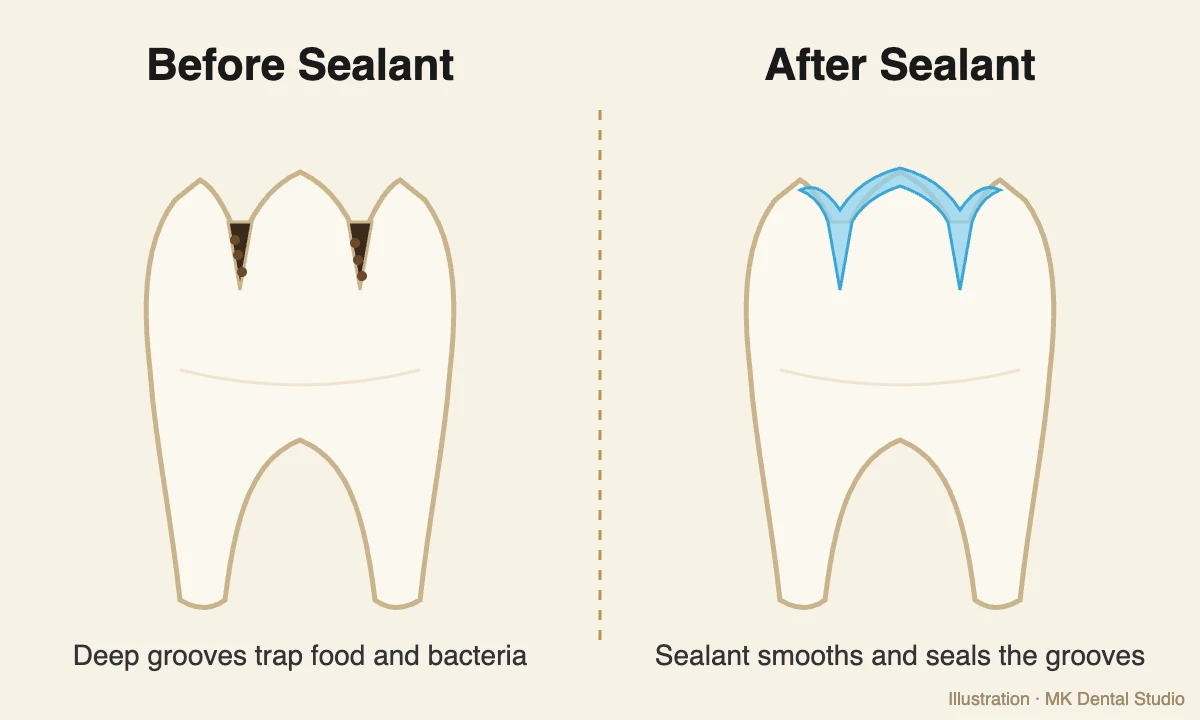
As permanent molars come in, often around age six and again around age twelve, your dentist may recommend dental sealants. These thin, protective coatings fill the deep grooves on chewing surfaces where food and bacteria like to hide. Most children do well with checkups about every six months, though your dentist may suggest a different schedule based on your child’s needs.
At MK Dental Studio on Vintage Lane in Jordan Ranch, Dr. Madiha Khanani, DDS, FAGD, and our team welcome families from Fulshear and Katy. Parents can often schedule around their own visits, and our new patient information page explains what to bring.
This article is for general education. Every child develops differently, so only an exam can tell you what your child’s teeth and gums need.
A first visit is a gentle introduction, not a big ordeal. Contact MK Dental Studio in Fulshear with your questions, or use the button below to schedule online. We look forward to helping your child start a healthy smile routine.

CALL Now: 281-219-8000
MK Dental Studio:
401 Vintage Ln.
Fulshear, TX 77423