

Now Open — Accepting New Patients!
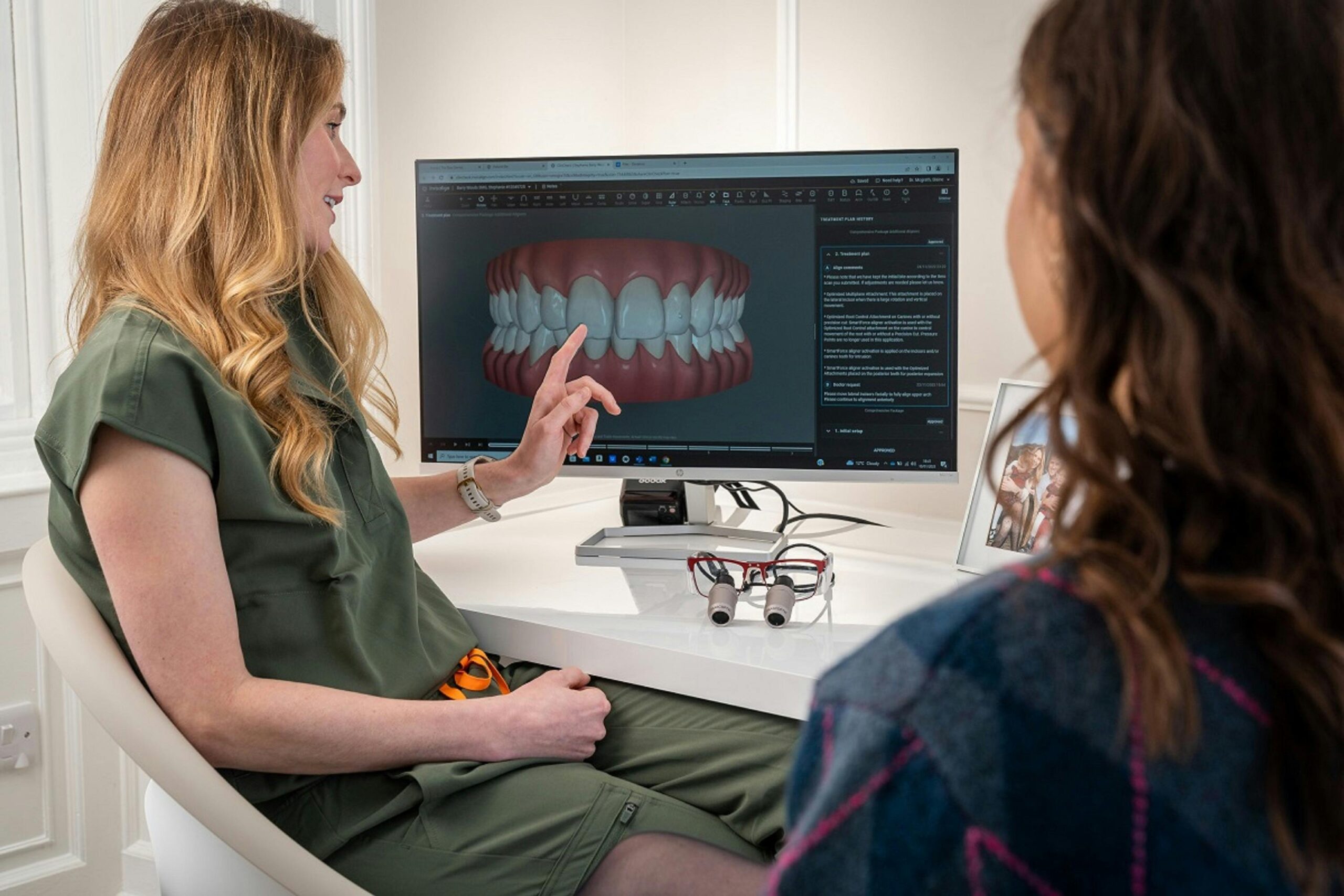
Maybe your teeth shifted after you stopped wearing a retainer, or crowding makes flossing a chore. Whatever the reason, clear aligners are one of the most common things adults ask about at their checkups.
Before you commit to anything, it helps to understand how aligners actually work day to day. Here are the questions we hear most often from patients in Fulshear, Jordan Ranch, and nearby Katy, with honest answers to help you decide whether Invisalign is worth exploring.
Invisalign uses a series of custom, removable plastic trays. Each set is shaped slightly differently from the one before it, applying gentle, steady pressure that guides teeth toward a planned position. You typically switch to a new set every one to two weeks, following your dentist’s instructions.
Many treatment plans also use small tooth-colored bumps called attachments. They give the aligners something to grip so certain movements happen more predictably. They are removed when treatment ends.
Aligners can address many common concerns, including mild to moderate crowding, gaps between teeth, and some bite issues. More complex cases may need a different approach or a referral for a specialist’s opinion. Only an exam, with digital scans and X-rays, can tell you what fits your mouth.
This is the question that matters most for results. Aligners are generally worn 20 to 22 hours a day, coming out only to eat, drink anything other than plain water, and clean your teeth. Leaving them out for long stretches can slow progress or cause trays to stop fitting properly.
Most people will not notice unless you tell them. The trays are thin and clear, which is a big reason adults with busy work and social lives choose them. You may have a slight lisp for the first few days while your tongue adjusts, and that usually fades quickly.
Expect pressure or tenderness for a day or two when you start a new set of aligners. That is a sign the trays are working. It is usually mild and short-lived. Sharp pain, a tray that cracks, or an edge that rubs your cheek is worth a call to the office so it can be checked.
It depends entirely on how much movement your teeth need and how consistently you wear the trays. Some minor cases finish in a matter of months, while others take longer. Your dentist will give you an estimated timeline after reviewing your scans, along with regular check-ins to track progress. Every mouth responds a little differently, so any estimate is a plan, not a promise.
If you are weighing options, our page comparing Invisalign and traditional braces walks through the main differences.
Teeth naturally want to drift back toward where they started, especially in the first year. That is why retainers are part of every plan. Your dentist will recommend how often to wear yours, which is often full-time at first and then at night. Keeping up with routine cleanings helps protect your new smile, too.
At MK Dental Studio on Vintage Lane in Jordan Ranch, Dr. Madiha Khanani, DDS, FAGD, starts with a full exam so you understand your options before making any decision. We also welcome patients from Katy and surrounding communities. If you are new to the practice, our new patient information page explains what to bring to your first visit.
This article is for general education. Your own treatment plan should come from an in-person exam with a dentist.
The best next step is a conversation and an exam. Contact MK Dental Studio in Fulshear with your questions, or use the button below to schedule online. We will look at your teeth, talk through what you want to change, and help you choose a path that fits your life.

CALL Now: 281-219-8000
MK Dental Studio:
401 Vintage Ln.
Fulshear, TX 77423